Introduction
KeyCorp (NYSE:KEY) is the parent company of KeyBank, a regional bank with over 900 branches throughout the United States. Last May, I wrote on why I sold the bank’s Series E preferred shares (KEY.PI) following the first quarter of financial results after the regional banking crisis. While the company’s shares and preferred shares have rallied, I believe there are still too many risks to take a position in KeyCorp common or preferred shares.
KeyCorp Financial Results
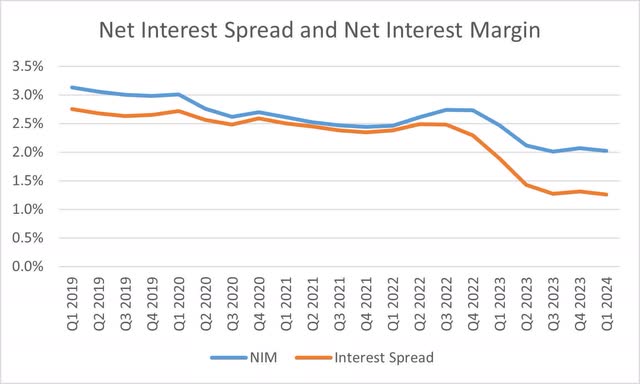
Like most other regional banks, KeyCorp has seen sharp increases in asset and borrowing yields as the Federal Reserve raised interest rates to combat inflation. Asset yields have gone from 2.5% at the height of the pandemic to over 4.5% today, while borrowing yields have gone from around 0.25% to nearly 3.5% in the same period. Despite the decline in net interest spread (asset yield less borrowing yield), the slide in net interest margin has been less precipitous but is still straddling at an uninspiring 2%.
Bank Financials Bank Financials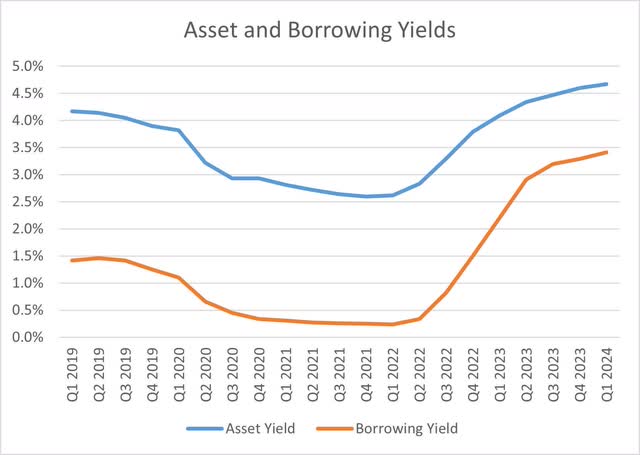
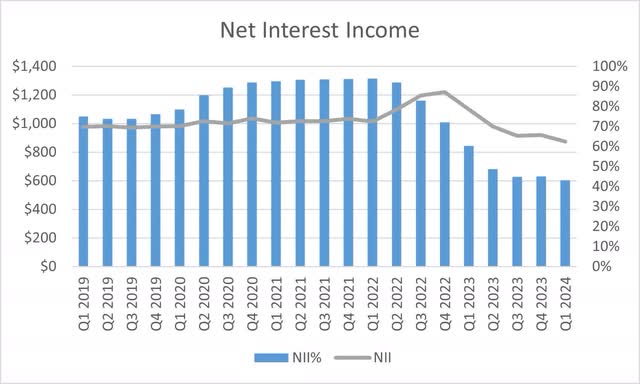
Corresponding to the yield related challenges is net interest income. Despite the increases in interest income with the increases in interest rates, interest expenses for KeyCorp have outgrown the income gains. The result is that net interest income (interest income less interest expense) is now under $1 billion for four consecutive quarters and sitting under any quarterly level of the past five years.
Bank Financials Bank Financials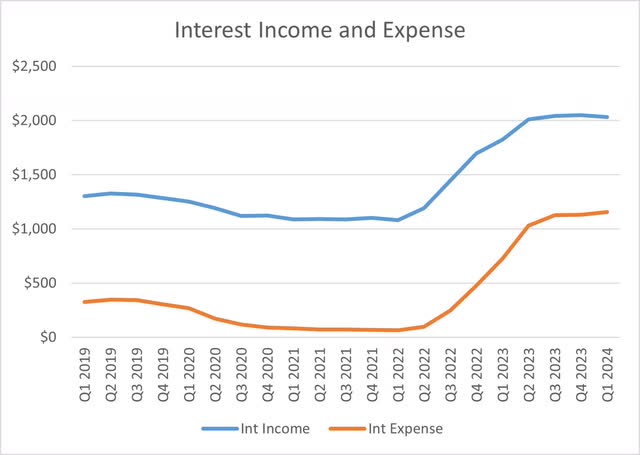
Declines in Loans and Deposits
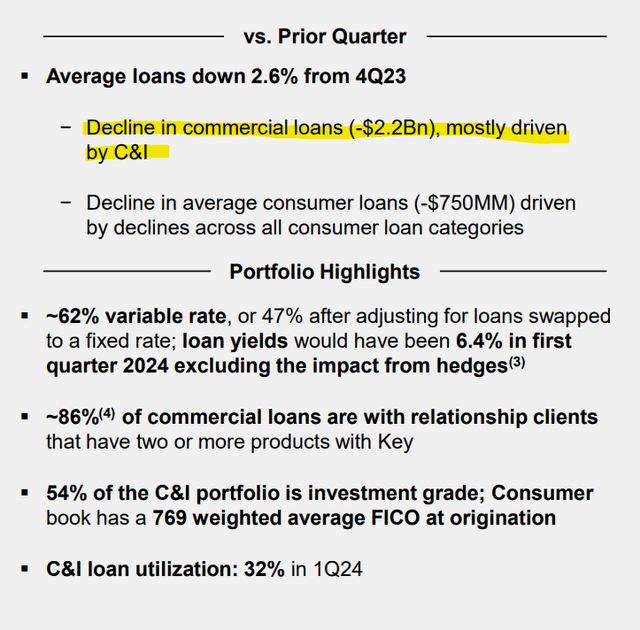
KeyCorp has experienced four consecutive quarters of lending declines, leading to a year-over-year drop in loans of nearly 10%. The bulk of the drop in lending comes from the decline of C&I loans, which are commercial and industrial loans that are mainly collateralized by working capital. The bank has also seen a decline in consumer loans.
Bank Financials Earnings Presentation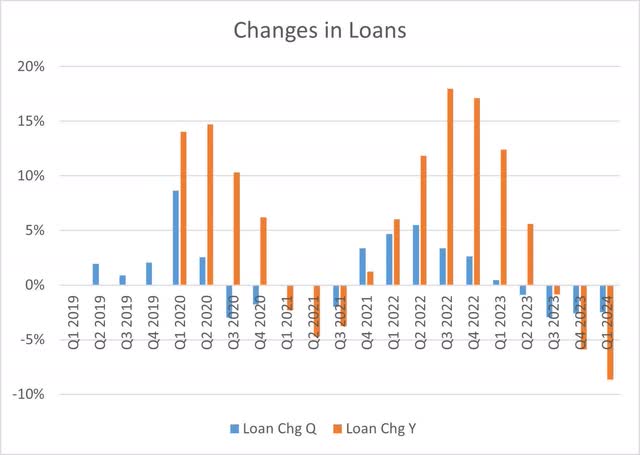
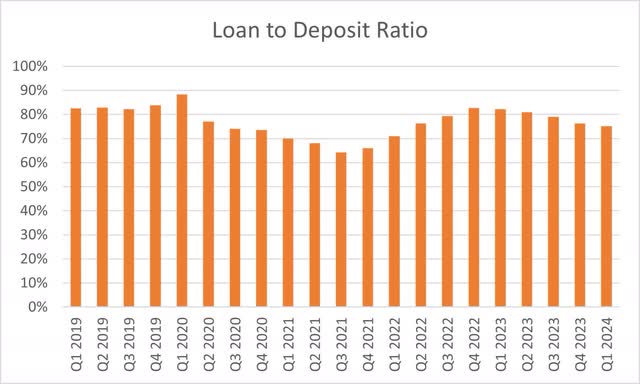
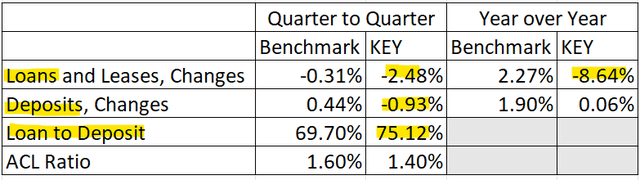
KeyCorp continues to struggle with deposit retention. After struggling to grow deposits in 2022 and 2023, deposits declined on a quarterly basis in the first quarter of 2024 and were flat on a year over year basis. But, because loan balances have declined at a faster rate than deposits, the bank’s loan to deposit ratio has eased down to a modest 75%, which is notably lower than nearly 85% at the start of the pandemic.
Bank Financials Bank Financials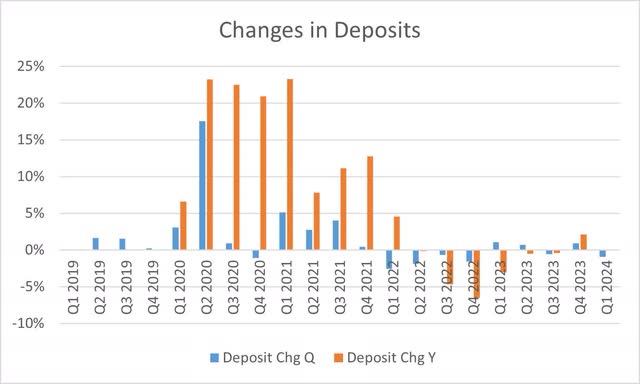
Loan Concentration and Performance Risk
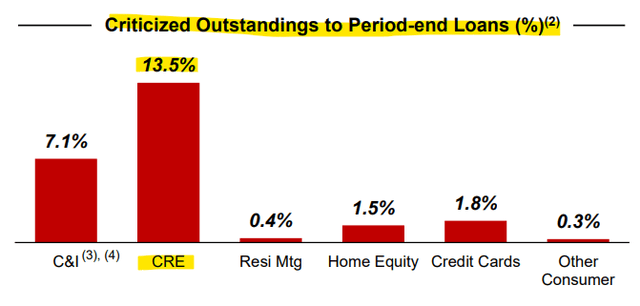
KeyCorp is quick to point out that it has limited exposure to non-owner occupied commercial real estate (CRE). In fact, less than 1% of the bank’s total loans are tied to office space. Despite the lack of non-owner occupied CRE in the loan portfolio, there are performance problems. Over 13% of all CRE loans at KeyCorp are currently under the “criticized” rating. Commercial and industrial loans are sitting at over 7% criticized. This is especially interesting considering that less than 2% of credit cards, which are considered the riskier of loan classifications, share the criticized status.
Earnings Presentation Earnings Presentation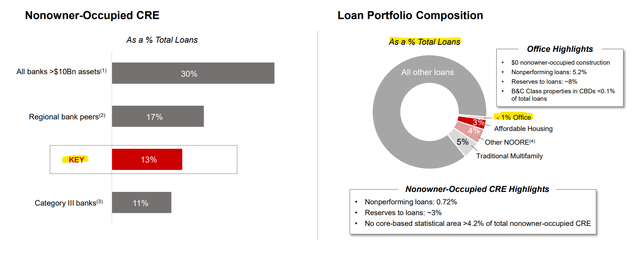
In total, the amount of criticized loans stands at nearly $6.6 billion, which is slightly more than double what it was at the end of the first quarter of 2023. The trend in nonperforming loans is not much better. Nonperforming loans stood at $658 million at the end of the first quarter, which was also much higher than the $416 million in nonperforming loans a year ago.
Earnings Presentation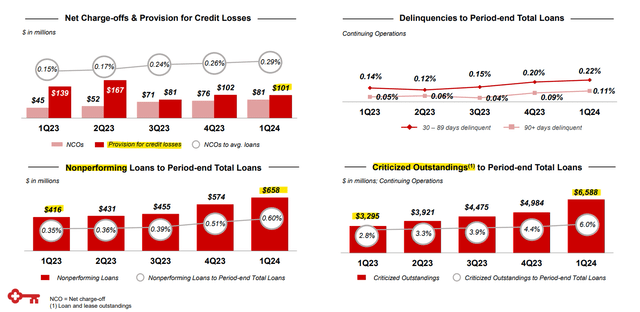
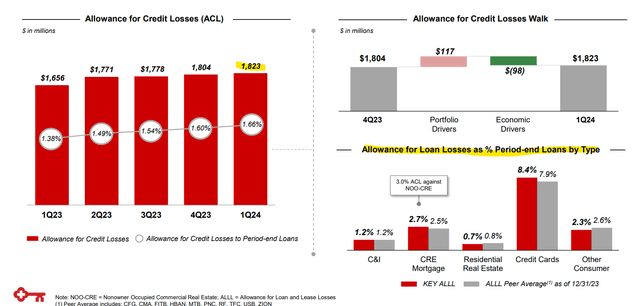
Having 0.6% of all loans in nonperforming status and 6% of all loans in criticized status is not assuring against an allowance for credit losses of 1.4% of gross loans. While KeyCorp has touted itself as ahead of its peers when it comes to allowance for credit losses, my data is showing the bank is slightly behind based on the ACL ratio to gross loans. The bank is building its ACL ratio, which will negatively impact earnings and is another reason to avoid the shares.
Bank Financials Earnings Presentation Bank Financials & Weekly Commercial Banking Update Report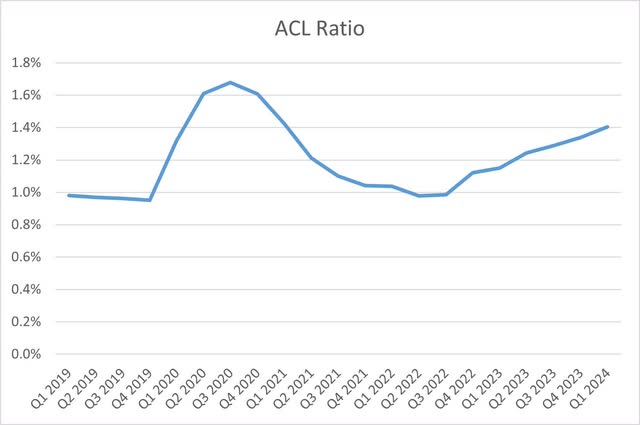
Uninsured Deposits Are Covered
One base that KeyCorp seems to have covered is uninsured deposits. At the end of the first quarter, uninsured deposits were estimated at $62 billion or 43% of total deposits. At the same time, KeyCorp has access to borrow up to $85 billion from various sources ranging from the Federal Reserve Bank of Cleveland to the FHLB. While the bank has good liquidity coverage here, investors should understand that the proportion of uninsured deposits could create earnings pressures should those deposits leave and force the bank to rely on more expensive external financing.
SEC 10-Q SEC 10-Q

Why I’m Avoiding the Preferred Shares
KeyCorp is currently offering four different preferred shares. KEY.PK and KEY.PJ are fixed preferred shares with yields close to 7%. These are below the norm for bank preferred shares, even those with investment grade ratings, but especially overpriced considering the risks mentioned. KEY.PL is trading near the same yields, but has a rate reset provision at the five-year Treasury rate plus 3.3132%. While the reset under today’s rate regime would imply a future yield of 8.32%, the reset is not scheduled until December 2027, creating a great degree of uncertainty and interest rate risk between now and then.
Microsoft Excel API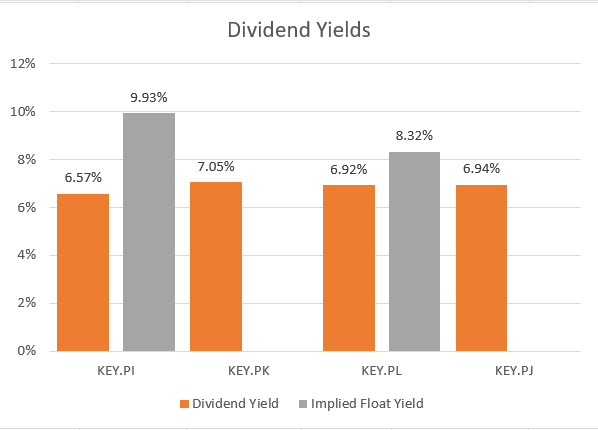
The KEY.PI preferred share provides the most income opportunity of the four offerings. The shares are currently offering lower income with a dividend yield close to 6.5% but are scheduled to float at a rate of three-month LIBOR plus 3.892%, implying a dividend yield near 10% with today’s rate structure. Once again, the same risk with KEY.PL applies as the rate is not scheduled to float until December of 2026. A lot can happen between now and then, therefore KEY.PI is subject to risks associated with lower interest rates and is still not an attractive option for me.
Conclusion
KeyCorp’s net interest spread, and net interest margin appear to have stabilized in the face of higher interest rates, but loan performance is starting to become a concern. The bank has a large amount of its CRE loans classified as criticized and does not appear to have adequate allowance for credit losses to cover these underperforming loans. Combined with the high pricing (lower yields) of the bank’s preferred shares, I am avoiding all equity options being offered by the bank.
pr
Read the full article here