
The Philly Fed’s Manufacturing Business Outlook Survey is a monthly survey of about 250 manufacturers in the Third Federal Reserve District, which covers eastern Pennsylvania, southern New Jersey, and Delaware. Participants of the survey indicate the relative level of general business conditions in the region. Since this is a diffusion index, negative readings indicate contraction and positive ones indicate expansion. While it focuses exclusively on business in this district, this regional survey gives a reliable direction of the broader Chicago Fed’s National Activity Index.
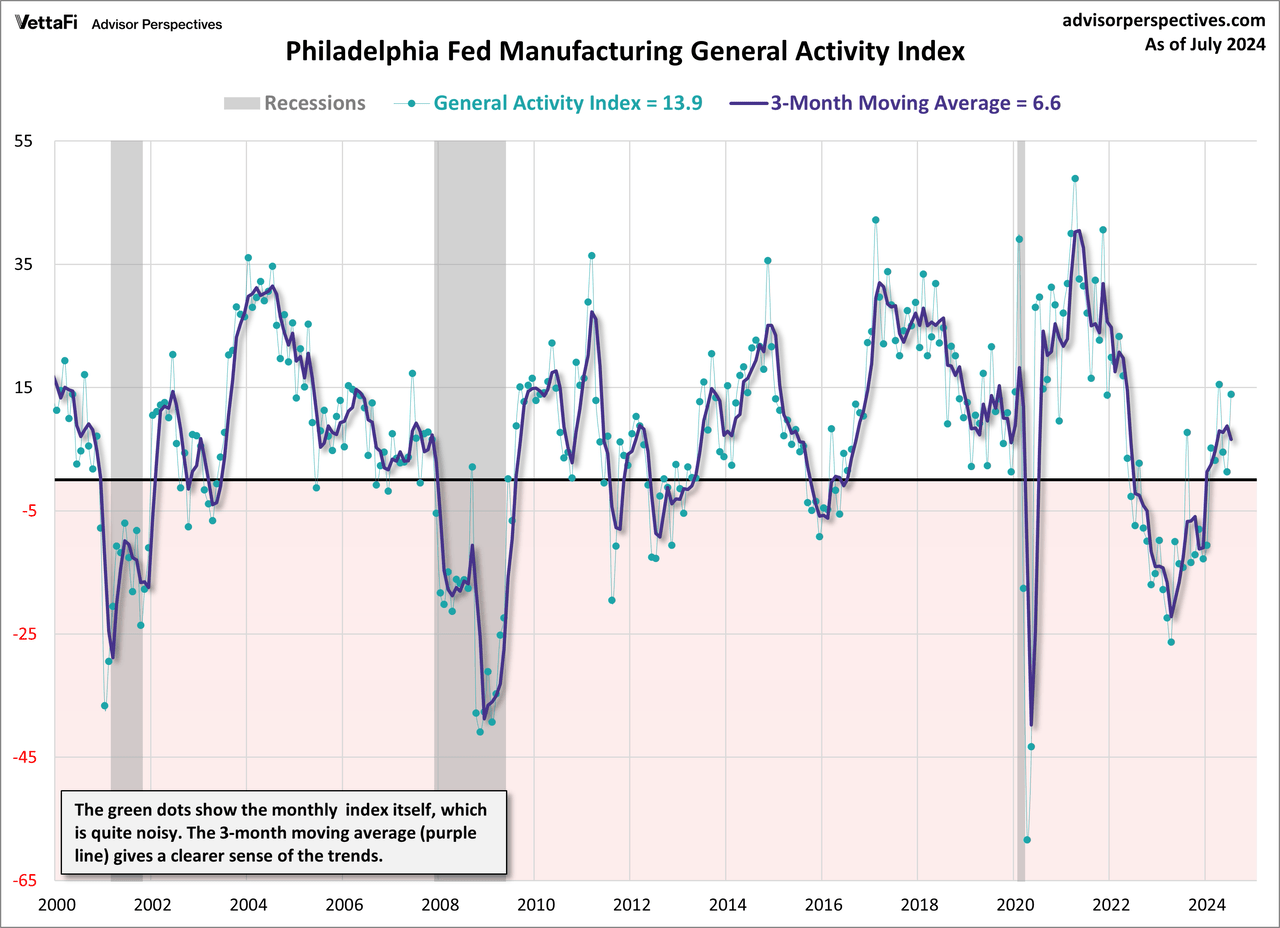
The latest Philadelphia Fed manufacturing index remained in positive territory for a sixth straight month as manufacturing activity expanded overall. In July, the index rose to 13.9 from 1.3 in June, coming in above the forecast of 2.7.
Here is the introduction from the survey:
Manufacturing activity in the region expanded overall, according to the firms responding to the July Manufacturing Business Outlook Survey. The survey’s indicator for general activity rose, and the indexes for shipments and new orders turned positive. The employment index also turned positive, suggesting an overall increase in employment levels. Both price indexes continued to indicate overall price increases. Most future activity indicators rose, suggesting more widespread expectations for overall growth over the next six months.
The first chart below gives us a look at this diffusion index since 2000, which shows us how it has behaved in proximity to the three 21st-century recessions. The green dots show the indicator itself, which is quite noisy, while the purple line represents the three-month moving average, which is more useful as an indicator of coincident economic activity. We can see longer and deeper periods of contraction during each of the recessions with shallower contractions in ’02, ’03, ’11, ’12, ’13, and ’15.
In the latest report, the index remained in positive territory for a 5th straight month. However, from June 2022 to January 2024, the index had 18 months of negative readings, which more closely resembled those periods during recessions.
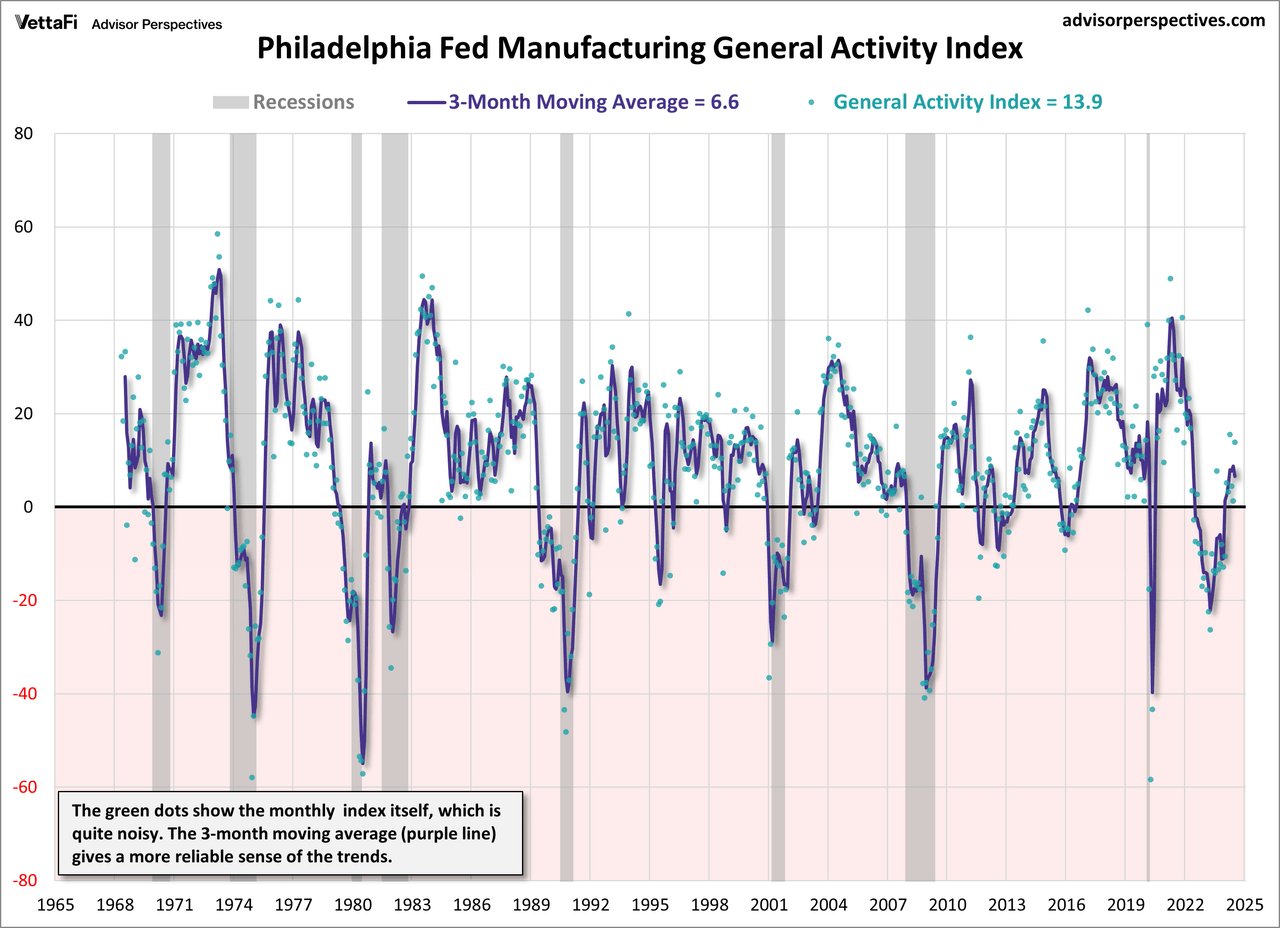
In the next chart, we see the complete series, which dates from May 1960. For proof of the high volatility of the headline indicator, note that the average absolute monthly change across this data series is 8.0.
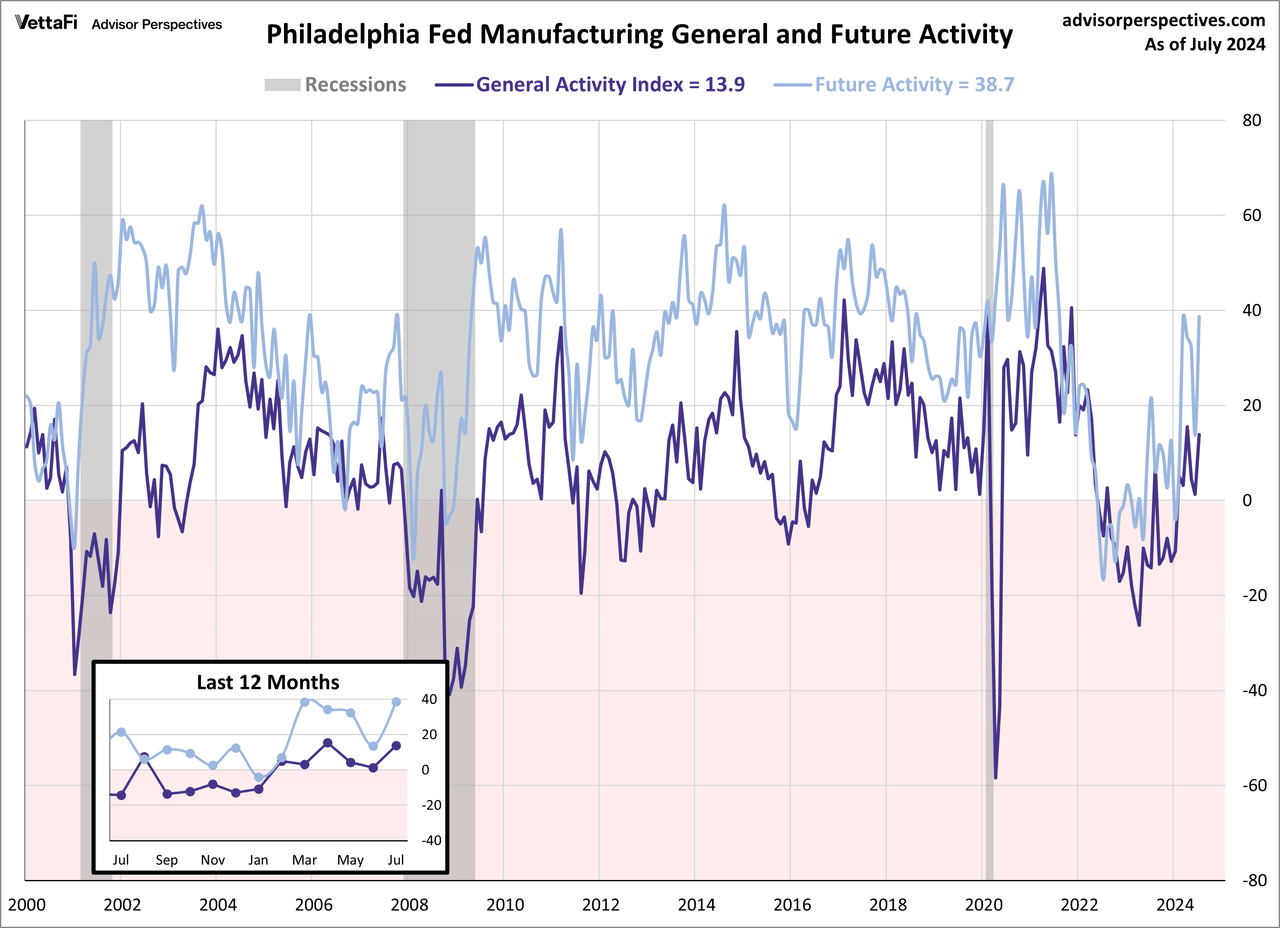
The next chart is an overlay of the General Activity Index and the Future General Activity Index – the outlook six months ahead. The six-month outlook increased to 38.7, its highest level in three years.
Most Future Indicators Rise – The diffusion index for future general activity jumped from a reading of 13.8 in June to 38.7 in July, its highest reading since July 2021 (see Chart 1). Forty-nine percent of the firms expect an increase in activity over the next six months, exceeding the 10 percent that expect a decrease; 31 percent expect no change. The future new orders index rose 15 points to 31.3, and the future shipments index rose 31 points to 31.0. The firms continue to expect an overall increase in employment over the next six months, and the future employment index increased from a reading of 19.0 to 23.8. The future prices paid index edged up from 56.3 to 60.2, while the future prices received index fell from 58.8 to 43.7. The index for future capital expenditures decreased 5 points to 7.4, its lowest reading since December.
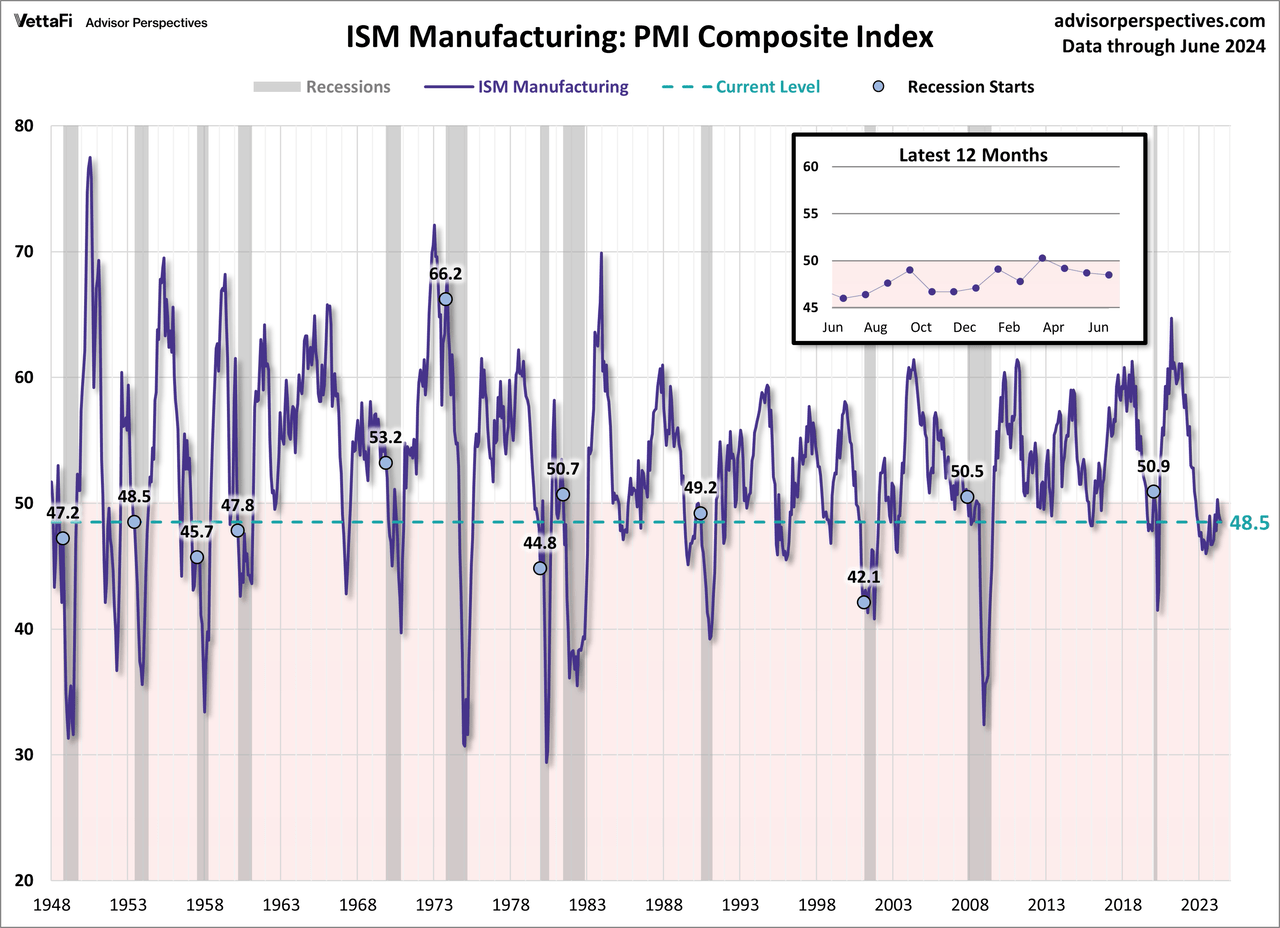
For comparison, here is the latest ISM Manufacturing survey.
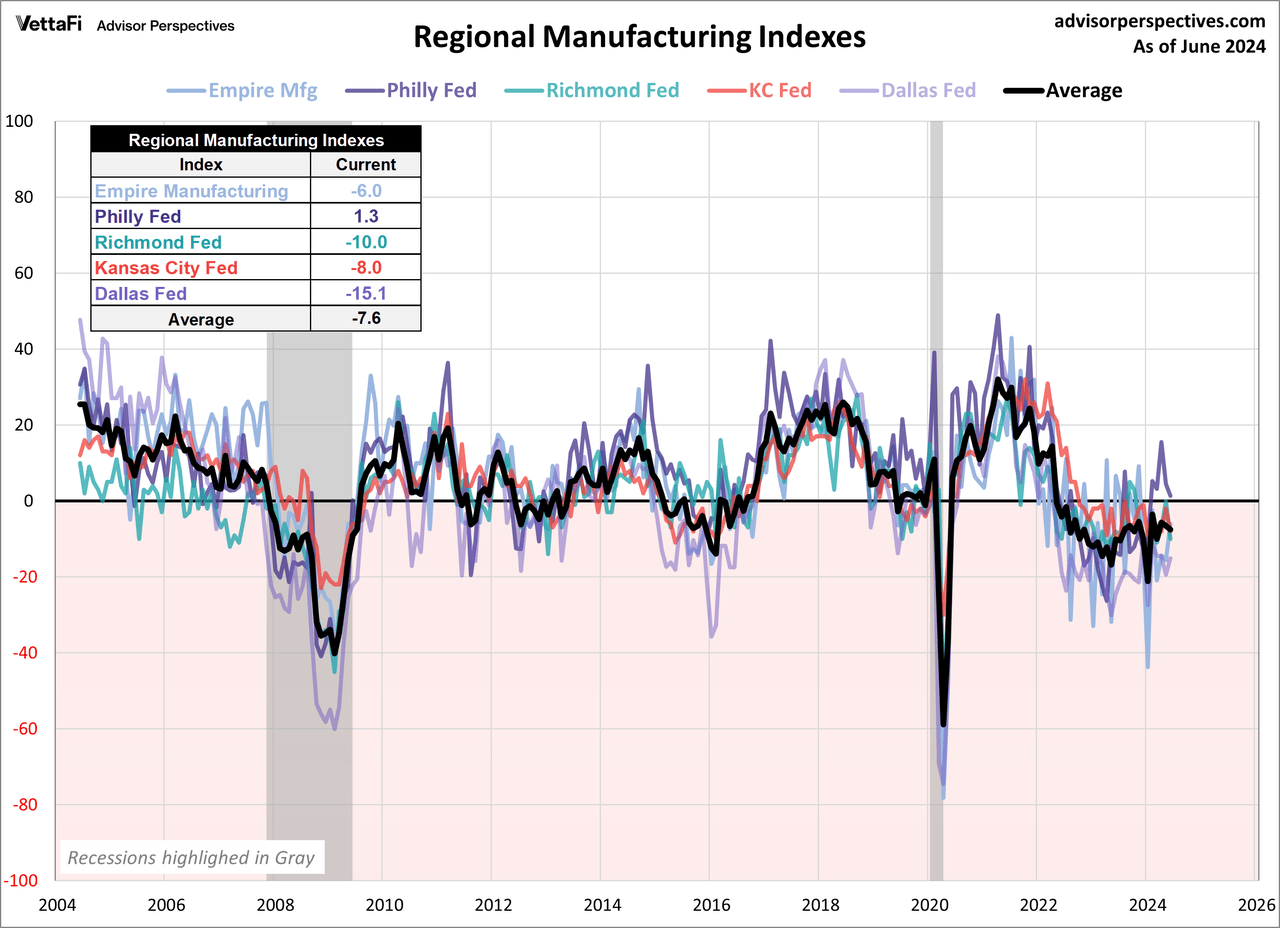
Let’s compare all five Regional Manufacturing indicators. Here is a three-month moving average overlay of each since 2004 (for those with data).
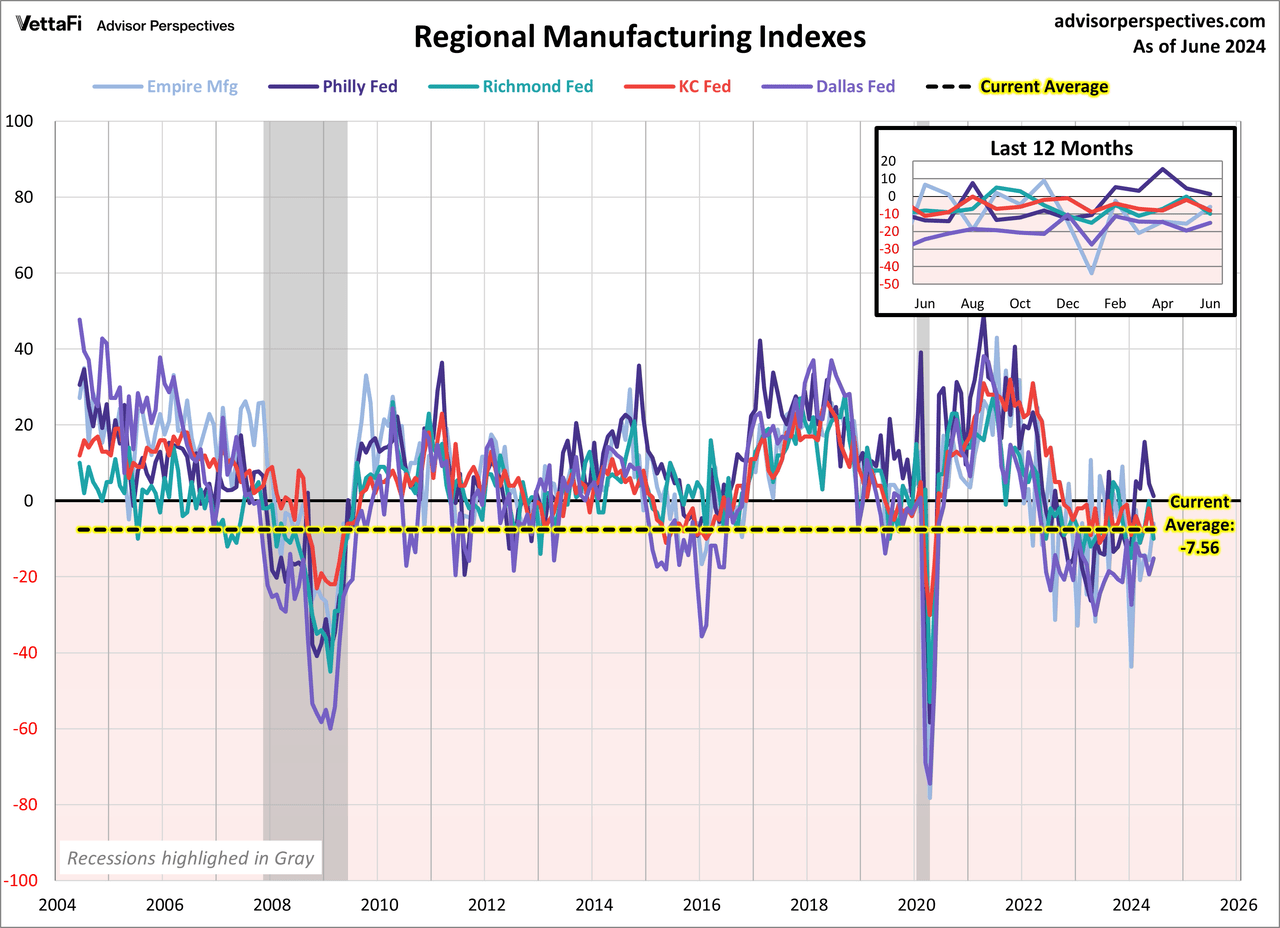
Here is the same chart, including the average of the five. Readers will notice the range in expansion and contraction between all regions.
ETFs associated with industrials and manufacturing include: First Trust Industrials/Producer Durables AlphaDEX Fund (FXR), Industrial Select Sector SPDR Fund (XLI), Vanguard Industrials ETF (VIS), and iShares U.S. Industrials ETF (IYJ).
Original Post
Editor’s Note: The summary bullets for this article were chosen by Seeking Alpha editors.
Read the full article here